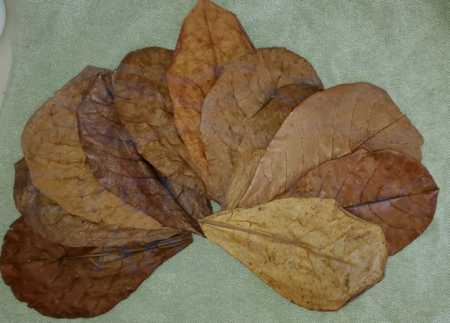
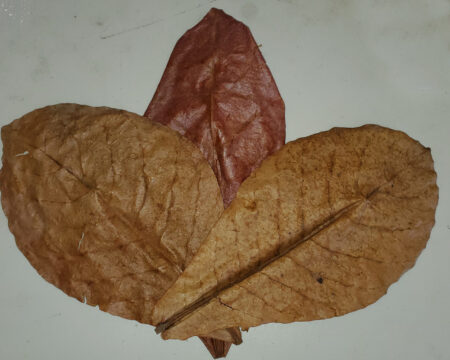
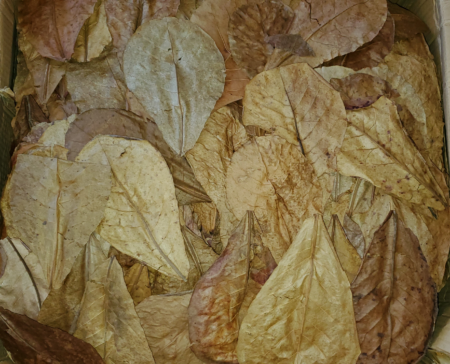
Description Organically grown Catappa leaves from Borneo with wide ranging benefits for freshwater aquariums. Hand picked from an organic farm in Borneo, these Catappa leaves, also known as Kepapang or Indian Almond Leaves, are among the most widely used botanicals in the freshwater aquarium hobby. Long valued by breeders and experienced hobbyists for their well documented antimicrobial properties, these leaves release tannins and humic acids as they decompose, creating water conditions that closely mirror the natural habitats of many popular freshwater species. Larger and longer lasting than Mulberry Leaves, they are suitable for a wider range of tank sizes and setups. Benefits Indian Almond Leaves offer a broad range of benefits and are one of the most researched botanicals available for home aquarium use. Antimicrobial Properties Among the most well documented benefits of Indian Almond Leaves is their natural antibacterial and antifungal activity. Tannins and humic acids released during decomposition actively inhibit the growth of harmful microorganisms, helping fish and shrimp resist infection and recover more quickly from stress related illness. Immune System Support Tannins support the immune system and have been shown to measurably reduce stress hormones in fish and shrimp, resulting in calmer behavior, more consistent molting in shrimp, and improved overall resilience. Inducing Spawning In livebearer and betta breeding tanks, the presence of tannins can help trigger natural spawning behavior. Many breeders consider Indian Almond Leaves an essential addition to conditioning and breeding setups. Bubble Nest Builders Bettas and other bubble nest builders actively use these leaves when building and anchoring nests, and the tannin rich environment encourages natural nesting behavior. Reducing pH and Softening Water Leaves release tannins as they decompose, gradually lowering pH and softening water in a similar way to driftwood. Beneficial for bettas, livebearers, tetras, Neocaridina and Caridina shrimp, and South American and Amazon species. Blackwater and Biotope Aquariums No need for commercial blackwater extracts. These leaves naturally recreate the tannin rich conditions of tropical streams and flooded forest floors, benefiting species that originate from soft, acidic blackwater environments. Shrimp and Snail Food Source Shrimp and snails graze actively on biofilm that develops on decomposing leaves and consume the leaves directly, providing a natural supplemental food source. Hiding Places and Natural Decor Whole or broken leaves provide natural shelter for shrimp, fry, and small fish, reducing stress and encouraging more natural behavior throughout the aquarium. How to Use Add whole leaves or break into smaller pieces directly into the aquarium. Leaves will gradually release tannins, giving the water a yellowish brown tint similar to driftwood. This slight discoloration is natural and harmless. Those who prefer crystal clear water can use activated carbon to reduce tannin levels. Storage Store in a cool dry location away from moisture and direct sunlight.